
无间道二
高通公司在反垄断诉讼中攻击英特尔,并攻击英特尔的降价。_我的网站

A |
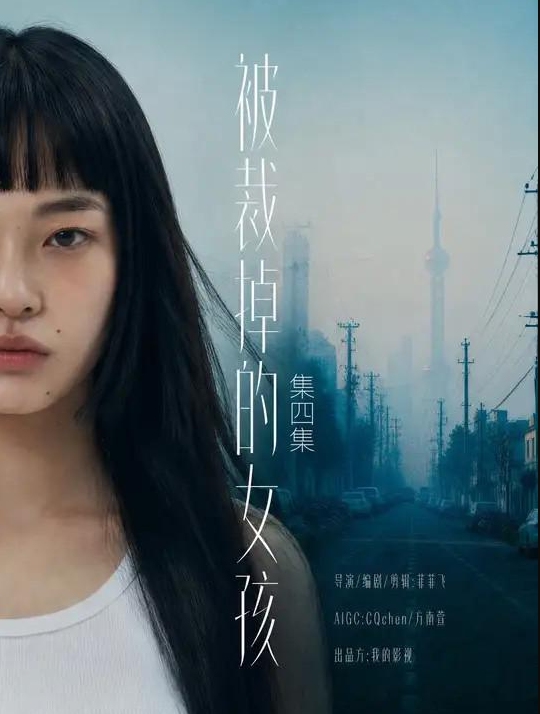
Fang Taozi, an AI-generated character who stars in the hit AI short drama series The Girl Who Was Fired, has posted lifestyle vlogs, launched social media accounts, shared her breakfasts, workouts and pets, landed brand deals and has a fanbase.
Since the drama debuted on short video platform Douyin on June 12, it has accumulated 200 million views. Fang's Douyin account has attracted more than 400,000 followers.
Fans interact with her as if she were a real celebrity, creating fan edits, discussing fictional relationships and building a community around her imagined life.
This raises a question that has become increasingly urgent for the entertainment industry: Does Fang Taozi represent the first generation of AI celebrities? The answer depends on how "celebrity" is defined, said Zhang Peng, a cultural researcher and associate professor at Nanjing Normal University, in an interview.
If celebrity status is measured by public attention, emotional connection and commercial value, Fang appears to meet many of the criteria. She has fans, a personal brand and even advertising opportunities.
Whether AI can truly become stars depends not on the technology itself, but on their ability to forge genuine emotional connections with audiences and sustain their appeal over time, added Zhang.
However, Shi Wenxue, a Beijing-based cultural critic, argues that AI stars have indeed emerged, but they should be viewed as part of the broader lineage of virtual idols.
From the 1958 US virtual musical group Alvin and the Chipmunks to Hatsune Miku, Luo Tianyi and the hyper-realistic digital human Liu Yexi, virtual performers have existed in various forms for decades.
From the perspective of how she is created, Fang Taozi represents a technological advance. Her emergence is largely a product of the current economic environment of the film and television industry.
The rise of AI performers has also triggered concerns among human actors, especially those working in smaller productions.
Human performers bring personal experience, emotional interpretation and unpredictability - qualities that remain difficult to reproduce. But for industries that require large volumes of affordable content, AI characters offer obvious advantages: They do not age, can work continuously and can be customized for different audiences.
AI short dramas are cheaper, faster and free from the risks associated with human performers, raising concerns over the future of lower-level entertainment jobs in areas such as short dramas, advertising, background acting and voice work, said Zhang.
In Shi's view, beneath the debate lies a familiar tension: technological efficiency versus the threat of displacement for human workers.
The question is not whether AI will completely replace actors, but which parts of acting and entertainment can be automated, he noted.
Rather than presenting an AI figure only as a digital image, Chinese platforms appear to be building complete entertainment ecosystems around AI characters, including dramas, social accounts, fan interactions and commercial partnerships.
China's AI stars have grown out of the audience's desire for emotional companionship, while Hollywood's AI experiments have been shaped by industry battles over efficiency and costs, noted Zhang.
According to Shi, Fang Taozi's sudden popularity is, in many ways, a reflection of audience psychology. Whether they are moviegoers, fans or casual viewers, audiences have grown weary of formulaic content, scripted fan service, predictable performances and fragile celebrity personas. An idol like Fang Taozi offers an alternative: She cannot be involved in scandals, play diva or break character, and her persona can be adjusted to meet audience demands. But the model also comes with risks, particularly the limitations of its creators and the potential for excessive commercialization.
。北京时间1月12日上午消息,面对联邦贸易委员会(FTC)的诉讼,高通律师希望与英特尔竞争,建立一个典型的滥用行业主导地位的模式,并以此作为奖金。但实际结果与预期相反。高通公司的律师们本周对英特尔首席战略官艾莎·埃文斯的提问大多适得其反。此后,律师拒绝了法官邀请埃文斯再次作证的提议。”我们不会邀请她,法官大人。”高通公司的律师安东尼·瑞安告诉美国治安官露西·科尔。埃文斯当场欢呼,在法庭上引起一阵笑声。埃文斯负责英特尔的手机芯片部门。她反复使用Ryan的问题来重申英特尔的观点,即高通公司不公平地利用智能手机组件市场的技术许可和领导地位来排挤竞争对手。Ryan一再希望只引用Evans的电子邮件和庭审前证词摘要,这是节省庭审时间的常用方法。但埃文斯不同意这些要求。她认为她有权在法庭上大声宣读整个文件,因为背景资料至关重要。当瑞安试图打断她的时候,她不理她,继续读着文件。埃文斯出生于塞内加尔,成为芯片行业罕见的黑人女性高管。

B | 她在英特尔的使命是获得手机市场的市场份额,并使其与PC市场一样占据主导地位。”瑞安先生,瑞安先生,你说得太快了。“放松点。”她曾经对律师说,“我的母语是法语,数字不太清楚。请慢慢说。英特尔是全球第二大芯片制造商,目前占据计算机服务器芯片市场的90%。该公司在个人电脑市场的收入也占到了80%以上。

C | AMD是该公司唯一的竞争对手,它指责AMD利用市场优势迫使PC制造商只使用英特尔产品。

D | 双方最终在2009年达成协议,英特尔向AMD支付了超过10亿美元。埃文斯认为,高通公司通过独家合同锁定了苹果的合同,这使得它无法与英特尔达成合同。”他们在2016年说我们还有一次机会。但在2014年,我们失去了机会,因为苹果与高通公司签署了一项协议。

E | ”我们推迟了两年,这是一次比死亡更好的经历,”她说。高通公司首席执行官Steve Mollenkopft将于周五出庭作证。他曾说,政府没有证据表明,该公司的“无执照、无芯片”政策对行业竞争有害。

F | 高通公司还表示,英特尔目前作为苹果唯一的芯片供应商的地位,正是该行业健康竞争的证明。埃文斯称赞高通公司,但她的观点迎合了联邦贸易委员会的诉讼。”他们在技术上很优秀,但不能允许他们从事不公平的商业活动,”她说。
Current article:http://orkq.ningshunsaotuiqiao.shop/list_sxv2us/zbt5nb.html
Published on:19:22:51
[责任编辑: 华秉成]